
Time: 12th of July, 2019. A Friday.
Place: Ghada’s corner in the old market of Nazareth.
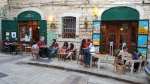
Description: walking up the flagstone path from the Basilica of the Annunciation inside the old market at the hour of the evening is breathtaking. Just on my right, a swoop of swallows rise and circle the grey dome overlooking Mount Precipice. A group of nuns descend the stairs towards the city center and I can hear them murmuring in Italian. I enter the market narrow alley, covered with zinc plates. The air is thick here and all of the shops are closed. Usually they close at 3pm. I climb my way up the road slowly, trying to listen to the walls recount the stories of the place- isn’t this the memory of a space? the stories that are told by the cobblestones, the graffiti, the signs and the stone gutters?
I arrived early to Ghada’s corner and I sat to catch my breath and spoke with Ghada about the market news, tourism and the current socio-political situation. The situation is nothing but alarming. I don’t drink coffee as I know it will make me hyper before a big event like today’s. So I refrain when Ghada offers me an Arabic, rich cup of coffee, and I drink water.
It’s a poetry reading workshop along with an open stage for poetry recital. My friend, Yara Abu Dahod, and I have organized this in an attempt to bring poetry closer to the real life, and thus the event’s name “Poetry is Closer than the Sea”. I prepared two poems in English, Yara prepared two in Arabic, and then we would have an open stage for free performance.
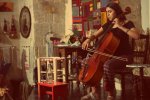
The audience arrive on time: familiar faces of friends and loved ones. We all sit on comfortable, traditional Arabic chairs that Ghada had collected over the years. Her shop is like a museum: an old arch connects two old stone rooms built probably 200 years ago. The walls are covered with antiques, trinkets, hand-made cloths and souvenirs. A chisel from Armenia, a long necklace of cloves made to protect people of envy, according to the Druze tradition, embroidered bags and much more. I recommend everyone who has the chance to visit Ghada’s corner and to enjoy a good cup of Arabic coffee.
We start on time which is good. We begin with a welcoming word and a brief overview of what we’re gonna do. We don’t want it to be a class, nor are we lecturers, we just want to enjoy poetry together. So we sit in circle and begin our first poem: “Now” by Marwan Makhoul, a local poet from the village of Mia’lia (I translated the poem here). The theme of the event is meditative poetry: to read poems with a meditative intention. And our job is to provide the people who came with basic tools of poetic reading: metaphor, enjambment, simili, rhyme…
The participation of the audience is great as I got to listen to various interpretations of the same words from different people; some interpretations that haven’t occurred to me though I have read these poems more than once. If anything, it just showed me the power of poetry to have this flexibility and this accessibility to people’s hearts and minds.
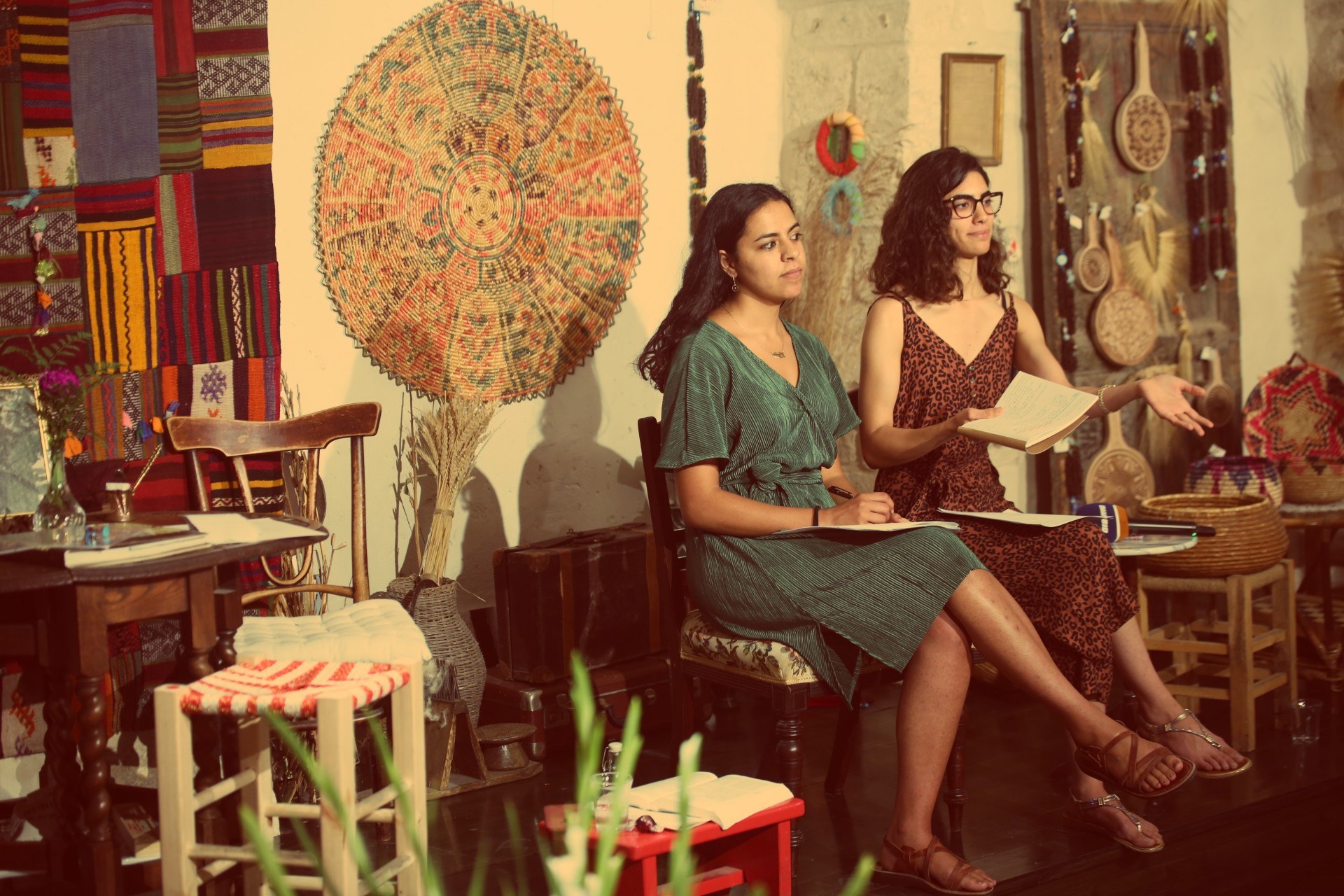
The next poem we discussed was “The Traveling Onion” by Naomi Shihab Nye. It was funny at first to repeatedly say the word “onion” and talk about it as if it’s this great character. After all it was just an onion, but as we sat there with our meditative hearts and eyes, we got to ponder an onion in a way that we never have: where did an onion come from originally? can we live without onions? what can the onion symbolize? It was very exciting indeed. One interpretation of the whole poem blew our minds: the onion symbolizes Christ. As the poem connects the fact that onion disappear when they’re cooked and receive little credit, with the value of sacrifice for others.
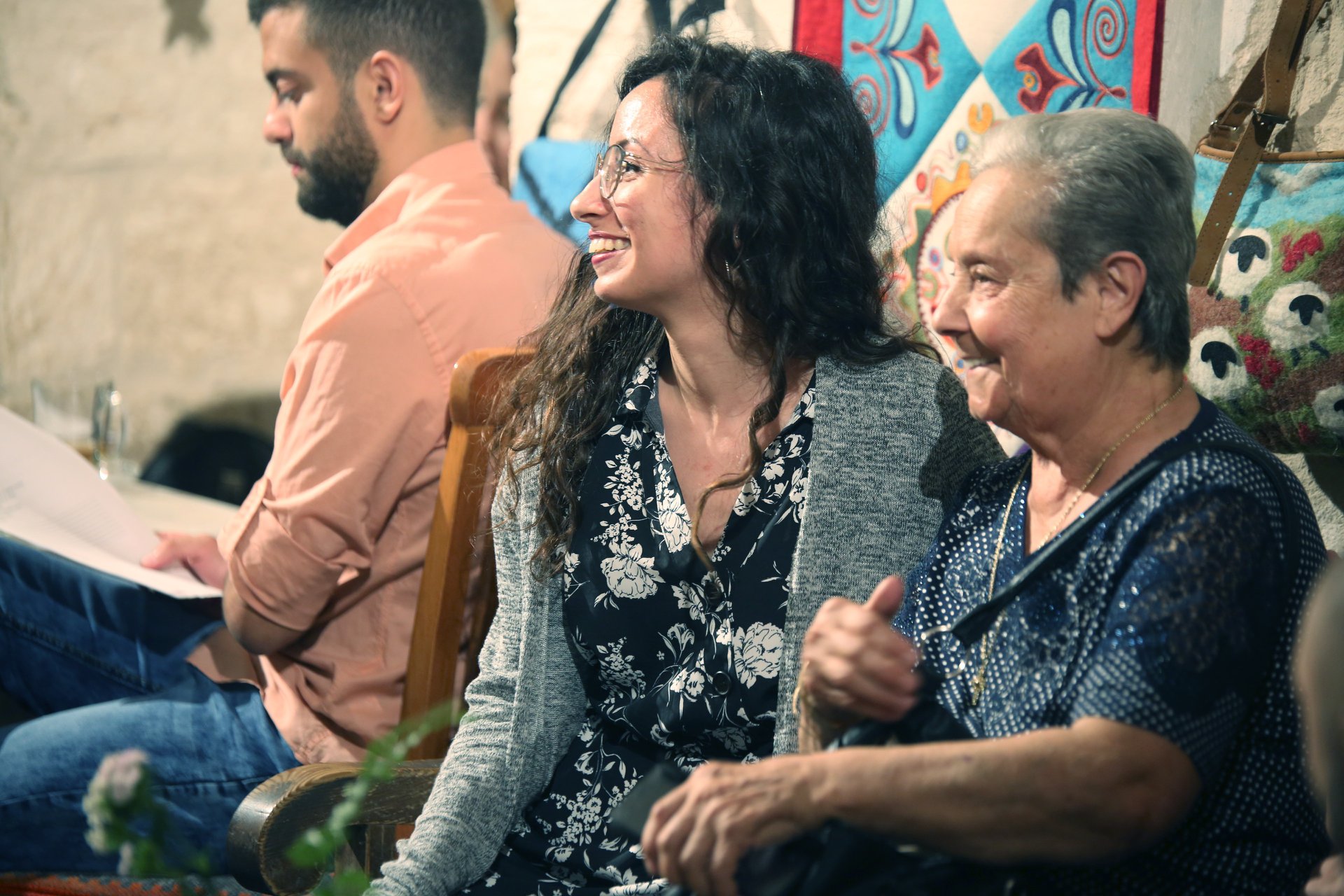
The next poem we discuss is The Dice Player by Mahmoud Darwish. It’s a long, famous poem in which Darwish recounts his autobiography in an epic soliloquy form. We discuss the part that talks about inspiration and writing: the speaker says that he’s not the creator of these rhymes, but he’s rather a messenger between the inspiration and the people. He’s a prophet of words. Many people in the audience offered their ideas about this “artistic urge”, which can be a bliss as much as it can be a curse. Later on five people would come up to the stage to read their pieces, expressing themselves and sharing their ideas with others.
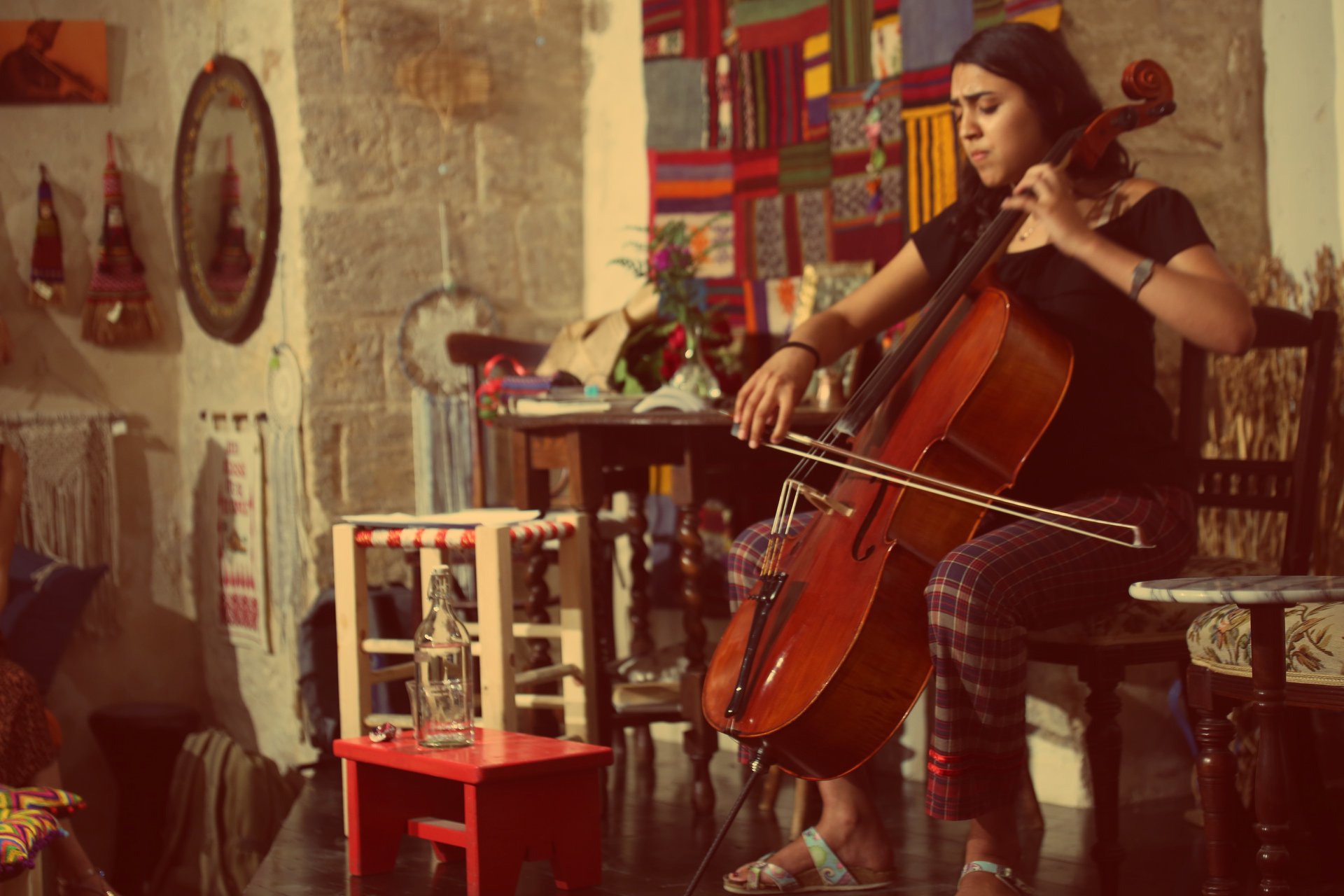
The last poem that I presented is an excerpt from The Wasteland by T. S. Eliot. Anyone who is familiar with Western literature or poetry knows that this piece is a landmark in the development of modernist poetry at the beginning of the 20th century. I chose this poem because I wanted to familiarize the audience with this famous poem, and also to hear their readings of this very difficult and dense poem. Honestly, we spent 4 lessons in university just to understand what was Eliot talking about. If anything, it’s a reflection of the confusion, mess and loss of that epoch, especially after the first World War.
Many people told me that such an event won’t make it because people don’t understand English, and they won’t understand the lines of the poems. This is not true. I left Ghada’s corner with tremendous energy for more and hunger for poetry, along with some conclusions and insights:
- poetry is strong and poignant. It’s a great to bring people together.
- language is never a barrier. The fact that I am passionate about English language is not a reason not to be involved in my Arab Palestinian community. It’s just another layer of richness.
- This is the beginning for something bigger: Poetry being closer to people.


 Poetry is Closer than the Sea
Leave a comment