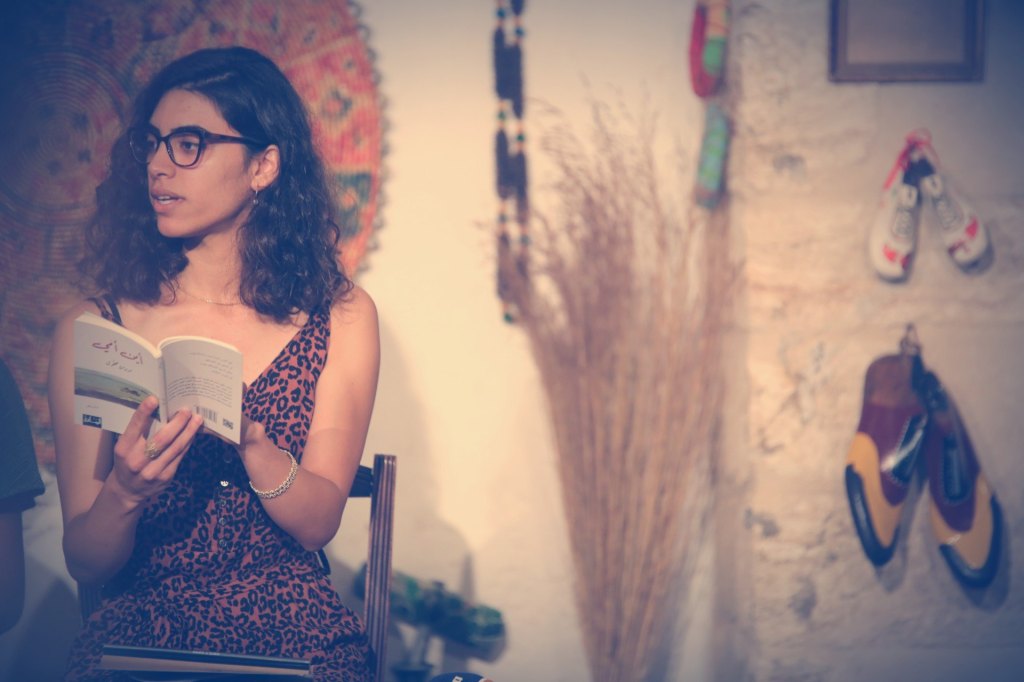
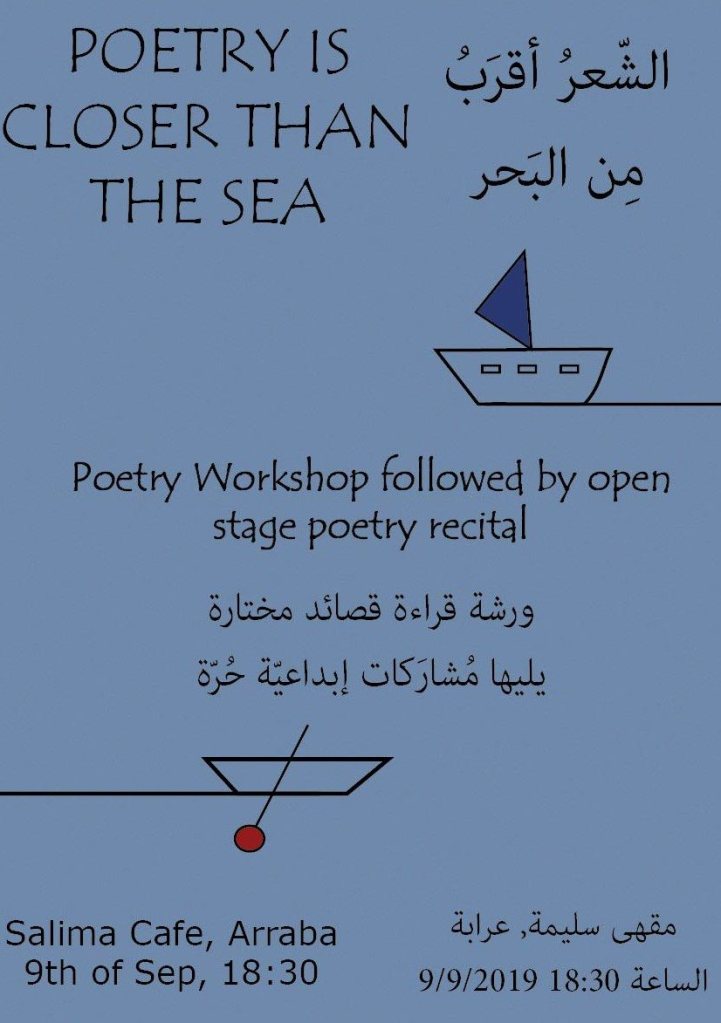
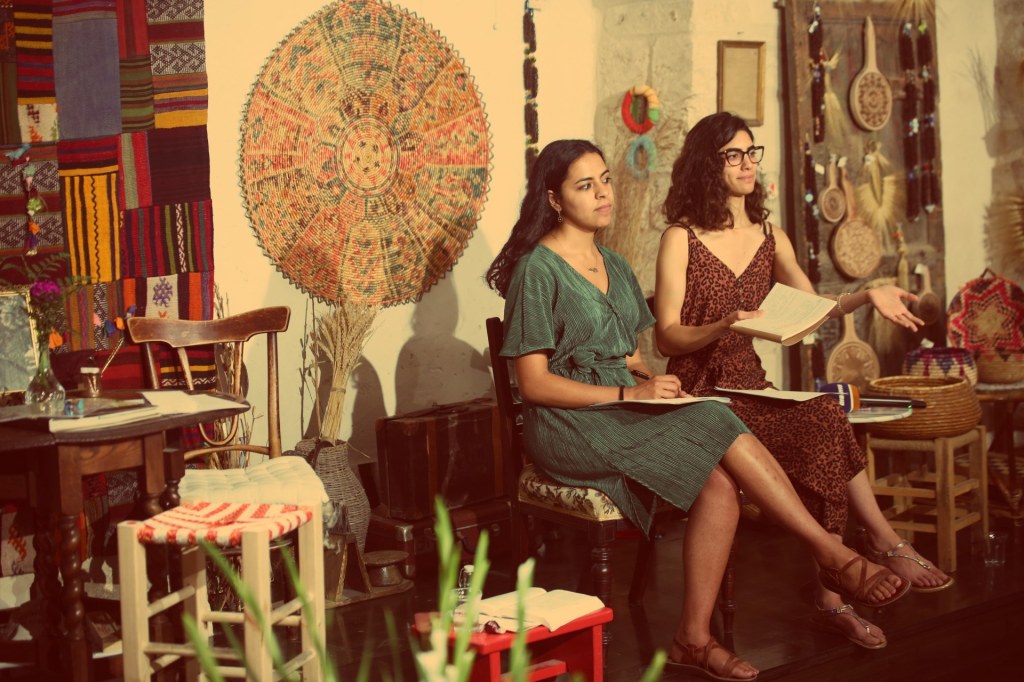
في التاسع من أيلول / 2019، أقمنا عائشة ياسين وأنا
أمسيتَنا الشعريّة الثانية، في قرية عرّابة البطوف، في مقهى سَليمة. قمنا هذه
المرّة بقراءة قصيدة في اللغة العربيّة وأخرى باللغة الإنجليزيّة، وأضفنا العنصر
الموسيقيّ بشكلٍ بارز، فكانَ الدّمج متناغمًا مُثريًا للعقلِ والنَّفْس. اخترتُ
مقطعًا مختلفًا من قصيدة “لاعب النّرد” للشاعر محمود دروش، بدأتُ
بمناقشته مع الحاضرين بعد أن قدّمتُ موجزًا عن الشّعر الحديث بشكل عامّ وعن
الشّاعر درويش بشكلٍ خاصّ. أمّا عائشة فقد اختارت قصيدة للشاعر ريتشارد ولبر
بعنوان “An Event”، وقدّمَت موجزًا عن الشاعر وعن الخلفيّة الزمنيّة التي كُتبت فيها
القصيدة وقامت بعد ذلك بمناقشتها مع الحضور.
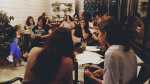
كان النّقاشُ فعّالًا ومثريًا ومُجَدِّدًا، استطاعَ الحاضرونَ
خلاله أن يعصفوا ذهنَهم بأفكارٍ وليدةِ اللحظة وأن يعبّروا بحريّةٍ عنها. اختلفت
أعمارُ الحاضرينَ وتنوّعَت اهتماماتُهم ومجالاتُ دراساتهم وأعمالهم، فمنهم مَن درس
العلوم السياسيّة ومنهم من درس علم الحاسوب أو فنون الرّقص أو الآداب أو علم
الاجتماع، وقد تمكّنّا من إثارة الإبداع الفكريّ لدى جميعهم. قصَدنا في نقاشنا أن
نلفتَ النظر إلى الأساليب البلاغيّة التي قد لا ينتبه إليها القارئ أو لا يعي
الغرض منها، كأسلوبِ تّكرار الألفاظ، كتكرار لفظة الحظّ في قصيدة محمود درويش
للتشديد على الحظّ كمفهوم مستقلّ وقويّ في مسيرة تكوُّن الفرد، وكأسلوب الاستفهام
في بداية المقطع الثاني من قصيدة ريتشارد ولبر: “”What
is an individual thing?.
أمّا عن سَيْر الأمسية، فقد ابتدأ بالموسيقى وانتهى
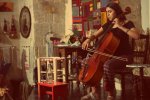
بقراءات شعريّة حرّة؛ افتتحَ مروان بلّان (كفركنّا) الأمسيةَ بالعزف على البيانو، ثمّ
ناقشنا المقطع المختار من قصيدة محمود درويش “لاعب النّرد”، وقبل البدء بمناقشة
القصيدة الثانية، عزف مروان مرّة أخرى كما عزفَت مروة ياسين (عرّابة) معزوفةً
ألّفتها بنفسِها، ثمّ باشرت عائشة بإلقاء قصيدة “An
Event” وقيادة نقاش غنيّ، عدنا بعدَه إلى فِقرة موسيقيّة أخيرة، شاركتنا خلالها
رندة سليمان (سخنين) بغناء أغنية تتحدّث عن العنف ضدّ النّساء، قامت بكتابتها
وتلحينها بنفسها.
ردود الفعل التي وصلتنا بعد الأمسية كانت إيجابيّة، فجميع الحاضرون عبّروا عن سعادتهم بالمشاركة، وعن ارتياحهم في النقاش، ووصفَ بعضُهم الأمسيةَ بأنّها تجربة فكريّة وروحيّة مُثرية – وهذا ما كنا نسعى، عائشة وأنا، إلى تحقيقه.
This time we experimented with the workshops sessions:
First we discussed one poem in Arabic, then we had a musical intermission that was followed by the discussion of the English poem. The Arabic poem that Yara presented is an excerpt from Mahmoud Darwish famous soliloquy “The Dice Player”. The discussion was really rich and offered me so many insights and connections to Darwish’s exquisite use of figurative imagery and metaphors. For example, the image of the feather falling on the sand. He used this image to describe the possible failure of a poem, that falls but doesn’t shine, but it merely swings like a feather and hits the sand, leaving no sound, echo or print. Another example of the beautiful descriptive language that the poem employs is when he talks about the inspiration of the poem, he says: I have no role in my life, except that when life taught me its hymns, I lit its lantern and tried to adjust/change its light. Isn’t this such a beautiful imagery? Moreover, my dad talked about the time that Mahmoud Darwish came to Arrabe and recited a poem in the square of the communist party center. He was 10 years old at that time, but he still remembers very vividly the charismatic, intellectual, young Darwish exciting the crowd. My dad telling this story added to the richness of the experience of reading Darwish. He connected the space of Arrabe with Darwish and his poetry that we were reading at the moment. This story connected us to the place and grounded us as well as our identity as sons and daughters of this land.
Having the music intermission was amazing, Marwan played a piece, then Marwa played a piece that she composed titled “lost and found”. It was a good thing to have a break from too much talking and focus on words, but rather to listen and to enjoy the mellifluous melodies of the piano keys.
Later, the English poem that I chose is “An Event” by Richard Wilbur. I chose this specific poem for many reasons: first, I think it’s fitting for the theme of the night – meditation. Second, I think it’s a simple poem that offers the readers a chance to read a simple, easy poem to reach a deep state of contemplation and reflection. The poem mainly talks about the speaker’s attempt to describe a flock of birds in the sky. It’s meta-reflective as it tries to capture the movement of the birds, and having failed to do that, the speaker announces at the end that this whole attempt that turned into a poem shows us “how cross-purposes the world is dreamt”. And I think this is such a gorgeous image invoking serenity and peace of heart. The birds have their formations and their purposes, and the poet has his purpose and way of perceiving things, and this poem is an intersection between these two paths. And this what makes poetry great.
We tried not to tell the people what the poem means, but to give them the basic tools of poetry reading, so they can shape their own idea and path of how a poem should be read.
We spent three hours lost in the world of poetry. At the end, four people of the audience shared their writings and another person sang a song that she wrote and composed. It was phenomenal.
I look back at this evening and I am filled with happiness and pride: the evening was successful. The audience was riveted, and had the chance to get lost in a less-stressful world of our reality. A world of rhymes, metaphors, interpretations, space to play and think. It was perfect. What added to the richness of this night are many things: first, the audience was diverse, including old and young, Christian Muslim and secular, persons from different villages and cities in the region. In addition, this is one of the first attempts to create cultural and artistic spaces and platforms outside of the known, famous centres such as the city of Haifa or Jaffa. This is one of the first attempts to bridge the gaps between the “not-cultured” village-dwellers and the intellectual scenes taking place in the cities. I can say for myself that I feel that this attempt reaped fruit: many people showed up and many people have asked for more events and nights like these. In addition, the librarian in our town has started an initiative to start a club for poets and writers in Arrabe. I think our evening has inspired such movement.
Last, I am grateful for everyone who took part of this and I’m looking forward to future events.
“الشّعرُ أقربُ من البحر” هو مشروع يقوم على توظيف طاقاتنا اللغويّة في المجال الشعريّ، وقد بدأنا ببنائه بعد أن عرضت عائشة عليّ أن نساهم في تقريب الناس من الشّعر، فعملنا على تطوير الفكرة حتّى أصبحت أمسية مستقلّة، تتناول قصائد عربيّة وقصائد إنچليزيّة تحملُ ثيمةَ التأمّل، وترسم سبيلًا نحو تذوّق الشّعر، وتتيح المجال لعصف الذّهن وللمشاركات الإبداعيّة.
أرى بأنّ هٰذه المبادرة، من جهة، قد كانت مساحة للنّقاش وتبادل الآراء، وهو ما نحن بحاجة إليه في عصر التكنولوجيا الذي يمنعنا عن التواصل الفعليّ. ومن جهة أخرى، هي مبادرة تقرّب الحضور من عالم الشّعر، من خلال توضيح بعض طرق قراءته وفهمه.
في أمسيتنا الأولى، والتي أُقيمت في تاريخ ١٢ حزيران ٢٠١٩ في سوق الناصرة / زاوية غادة، قمنا بمناقشة قصيدتين من أدب اللغة العربيّة الحديث، الأولى للشاعر مروان مخول بعنوان “الآن”، والثانية مقطع قصير من قصيدة “لاعب النّرد” للشاعر محمود درويش. كما ناقشنا قصيدتين من عالم اللغة الإنچليزيّة، الأولى بعنوان The Travelling Union للشاعرة نعومي شهاب ناي، والثانية بعنوان The Wasteland للشاعر ت. س. إليوت.
تفاعلَ جميع الحاضرين دون استثناء مع جميع القصائد الأربع، وقد كانت حلقة النقاش مُثرية ومتناغمة، توسّعَ إلى تجارب وتأمّلات شخصيّة، وهو ما أسعدَنا وأثبتَ لنا أنّ الشّعر هو طريق إبداعيّ نحو نقاشٍ إبداعيٍّ، وهو حالة روحيّة كاملة. إضافةً إلى ذٰلك، أتحنا المجال للمشارَكات الإبداعيّة الحرّة، فشاركَنا الحاضرون كتاباتهم الشعرية والنثريّة وموسيقاهم الهادئة.
خلال النقاشات، قام المشاركون بتحليل التّعابير الشعريّة من وجهة نظرهم الخاصّة. وتطرّقنا إلى الأساليب البلاغيّة، كأساليب التّشبيه والاستعارة والجريان المشتركة بين جميع القصائد الأربعة، وإلى المبنى والمفردات – وهي المكوّنات البنائيّة التي يمكن من خلالها فَهم الشّعر بشكلٍ أعمق.
في نهاية النقاشات، استطاع المشتركون ملاحظة الرابط التأمّليّ بين القصائد، فعلى سبيل المثال، مقابل صوت محمود درويش الذي يقول: “والوحيُ حظُّ الوحيدين” يأتي صوت مروان مخول قائلًا: “لو كنت أعرفُ سلفًا أنّ الإبداع / ليس اجتماعيًّا إلى هٰذا الحدّ، لكنتُ / وأدتُ قلمي في المحبرة”.




 Poetry is Closer than the Sea