What does this project intend to do || the theory behind the project

It attempts to explore, investigate and imagine the relationship between space and poetry. Questions are asked and some are answered, such as:

What space does a poem create? How does reading a poem affect the way we see/feel a certain space? Can a collective experience of a space be achieved through meditating on the same poetic verse? How does the physical and material place around me affect the way I read a poem? for example, if I read Wordsworth’s Tintern Abbey in a locked, dark room or if I read it in an open, green field, what difference does that have on the poem or on myself, the reader?

Obviously, all of these are valid, interesting questions. They open us to a wide field of possibilities to explore, learn and imagine.

In this blog, I document my project Poetry is Closer than the Sea, and its attempt to answer all these questions. I lean on the thoughts of many thinkers and philosophers, such as Lefebvre, Heidegger, Marx, Deleuze and Guattari.

Theory 

In his well-known book The Theory of Space, Henri Lefebvre writes: “space and time are not preconditions for experience, but they are rather experienced”. Such statement shakes the Kantian assumption that Time and Space are a priore; it makes space relative, and endows it with new meanings, beyond those transformed through our five senses.

Deleuze and Guattari offer their contribution to the spatial discussion by connecting space to the Marxist theory. They claim that space is a material abstraction. The capitalist system harnesses and takes over space in an attempt to reign it, tame it, and impose a meaning on it. One example for how authority controls society by annexing space is the one after the recent Arab revolution in 2011, the Egyptian government took over Tahrir Square and built a parking lot on it so to prevent any future protests, but also to disrupt the way people feel about the square as a source of democracy and freedom (this is interesting because the space of Tahrir Square was built through the colonial period in Egypt, and yet it served as the agora of liberation and democracy, that soon was controlled).

Heidegger also offers his contribution to the spatial element of the human experience (the phenomenon, which is distinct from being). In his elaborate mapping of the phenomenon, Heidegger establishes different realms and parts to access the phenomenon, such readiness-at-hand, present-at-hand and equipment. I would have liked to explain his theory more expansively, but I prefer that the reader refers to the original sources, and attempts to understand what does he mean. However, such deep understanding is not necessary to comprehend part of his theory that I’m incorporating in this project. Here is an excerpt to capture what he’s proposing as he talks about the carpenter:

“Phenomenologically speaking, then, there are no subjects and no objects; there is only the experience of the ongoing task. For example, when the carpenter is using the hammer and the nail engaged in work; he is not perceiving/thinking about the hammer in the same way he would if he stepped away and just looked at these equipment. He argues that in this experience, even the carpenter is not aware of himself as a subject.

What I try to do with this project is built on the premise that we’re engaging in the world, we’re looking at the hammer (in our case it would be the images, the poem…) and trying to perceive the phenomenon. In this process, the element of space, which is usually overlooked or perceived as a priore, is experienced. In other words, we’re all the time “in space”; we’re perceiving space as “familiar place” all the time, but at the time of the poem, my intention is to look at space in a more examining way- to look at it as a space, to deconstruct it and investigate it. It’s like when the carpenter stops using the hammer and looks at it.

However, the poem is a different entity- it’s printed on the page (physical) and a mental form as it creates a conceptual terrain of its own. Here I try to investigate the space of the poem in people’s hearts through meditation on physical space through questions like if you can describe the poem in a shape, what would it be? what color would it be? what texture?

My aim is to make us conscious about the space using the poem as an equipment. It’s actually reciprocal. We’re aware of the space/place through the poem and aware of the poem by the workshop [the space it creates].

Spatial Capital

16Julby Freddie Stuart posted on The Junction.

As the rate of return on capital increases at a faster rate than income, inequality increases.

This leads to centralisation of wealth and comparative diminution in the financial power of the consumer.

We are seeing this take place today, as small businesses are ripped off the high-street by multi-national corporations.

As these corporations expand, they are seeking places to expand their capital beyond the immediate vicinity of their traditional consumer base.

It is noticeable that as this happens we are seeing an increase in the use of spatial and temporal capital.

Spatial capital being the exploitation of new geographical locations, previously untapped by the invisible hand. (most notably with Chinese and Western enterprise into Africa).

We are also seeing this with temporal capital. Capital that guarantees a return by utilising future consumerism. I.e, debt. As a student I am weighed down by consistent reminders of my obligation to future remittance.

At what point does capital run out of space to expand?

المكان والشعر ||place and poetry

ولم يبق لهذا الخيال من أثر اليوم سوى في الشعر. فالشعر هو اللا مكان وليس المكان البديل. هو الفجوة التي يشقها الخيال داخل الواقع، فجوة مليئة بالتضاريس، ولا نهائية الكثافة. 

WE READ TAHA MOHAMMED ALI’s POETRY TOGETHER [despite the corona lockdown]

We are all locked up in our homes because of the Corona virus crisis. Despite these difficult times, we choose to keep our “poetic” activism going by having an online poetry workshop last week (10th of April, 2020).

The goal of this workshop, like our previous ones, is to create a safe, free space to discuss and read poetry. With no previous knowledge or expertise, we invited the audience to join us for a two-hour workshop. It was given by Yara Abu Dahood as she presented Taha Mohammed Ali’s poem “Al Bashiq” (sparrowhawk in Arabic).

After a brief introduction, we tried to conjecture what’s the poem about reading its title “Al Bashiq”. And yet Taha succeeded in surprising us by opening the first lines of the poem by addressing sadness:

الباشق
-1-
اذا استطعت يا حزن
يوما
ان اتحرر منك…
فاني ساشعر
حتما,
بغبطة المنتحر…
وهو يتحرر من تبعاتة .!!

The SparrowHawk

-1-

If I could one day

to liberate myself from you

sadness

I will definitely feel

the ecstasy of a suicider

releasing his burdens.

The 11-stanza-long poem is an apostrophe to sadness that reveals the poet’s deep doubts, fears, and longings. The language is fairly simple and he uses lots of enjambment, to make the poem a long rumination pinned down on a paper; a let go of a heavy sigh of bittersweet relief.

It was interesting to see the reactions of the audience, each one offering an interpretation of their own about the source of sadness and its function in the poem or in the poet’s life. Especially since the latter suffered from a violent exile and catastrophe when he was expelled from his hometown of Saffuriya.

The space this workshop created is interesting for many reasons. First, it was done online via ZOOM application and thus lacked the immediate, humane contact. Second, the theme of the poem is unusual-sadness, which prompted people to bring more serious and personal topics. Third, we still felt the tension between different interpretations as some participants wanted to prove that their own reading was the “right” reading. Fourth, many of the people who took part of this workshop never read poetry before and so many were more interested by the content and context of the poem rather than its form. And last, I felt an actual sphere or space manifesting itself to house the different readings.

In my study of poetry and space (email me for the whole thesis I wrote about the relationship between these two fields), I focused on two aspects: how does the poem we read affect the physical space we are in, and how does the physical, social space we are in affect the space of the poem (the space that the poem creates). This workshop things were different, as we weren’t sitting in the same physical space, but each one of us was sitting in the comfort of their homes. And yet we created an online, virtual space to be shared by all of us.

Another space that this workshop creates is free-consumption space.
We are told that we should make the most of our time during this quarantine; we should make our time “productive” by investing it in cooking, watching a movie, working out, planting… all sorts of consumption. Reading a poem and contemplating its meaning demands nothing of that. It is a free space not to consume. Although some people might counter-argue and say that we also consume poetry, and it might be true, but this is not the purpose of the Poetry is Closer than the Sea platform.

Moreover, since we are all locked in our homes with a limited access to other places and spaces, contemplating becomes a necessity. And this is exactly what we aimed to have: a contemplating, pondering and imagining of the world, the poem, the poet and the feeling of sadness.

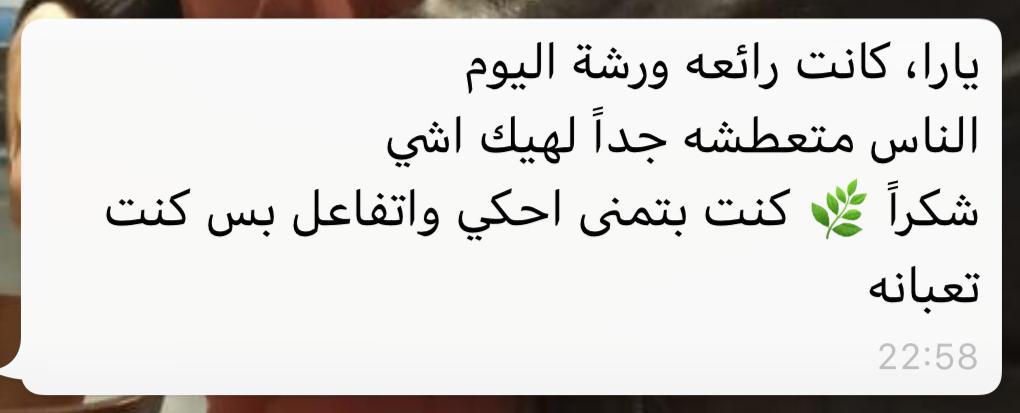
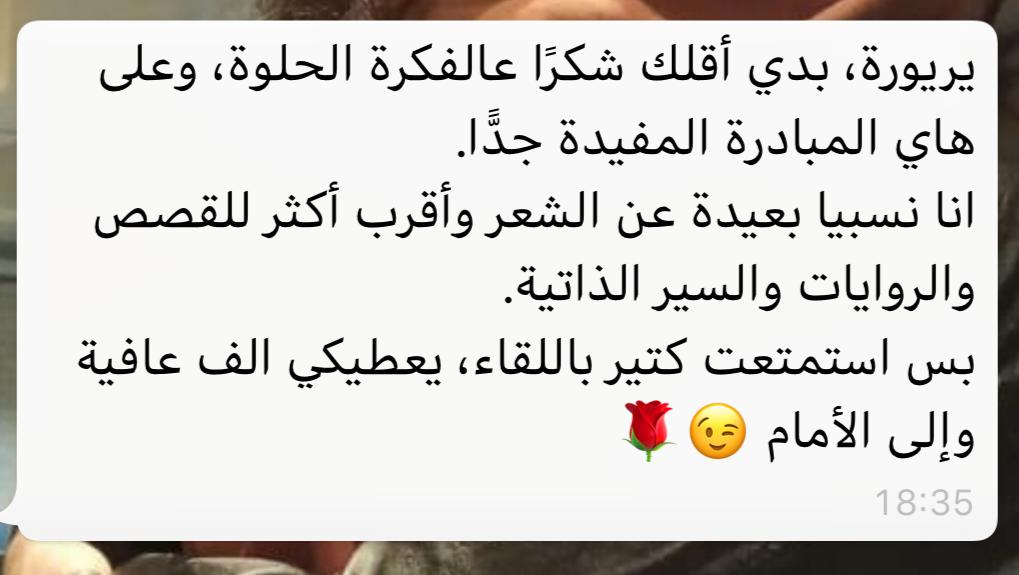
HERE ARE SOME REVIEWS OF THE PARTICIPANTS:

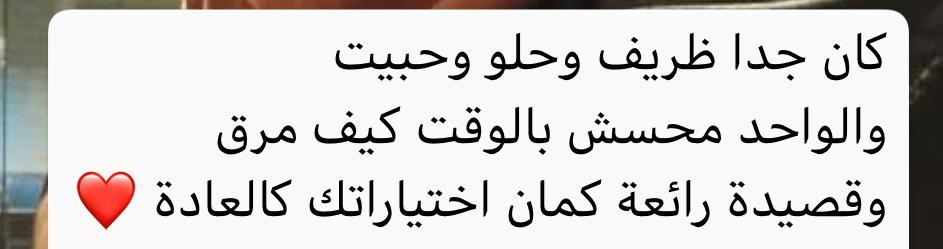
It was really beautiful and cute- one didn’t feel the time passing!
Yara, the workshop was great today! People are thirsty for poetry!
Thank you!
Thank you for the amazing idea, and useful initiative.
I am usually far from poetry and prefer novels and autobiography, but today was really beautiful! Keep it up!

Stay tuned for our next workshop to discuss a poem online next week!

Blog at WordPress.com.

Up ↑

Design a site like this with WordPress.com
Get started