Haifa Writing Workshop

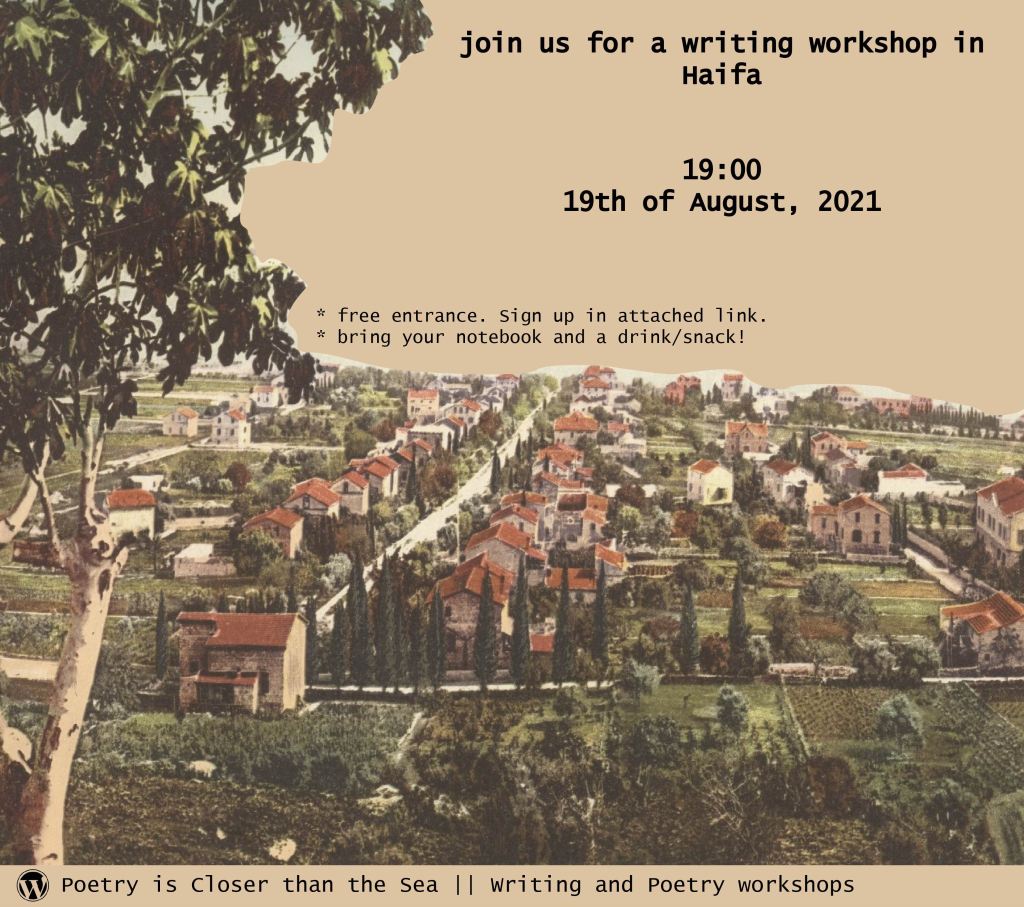
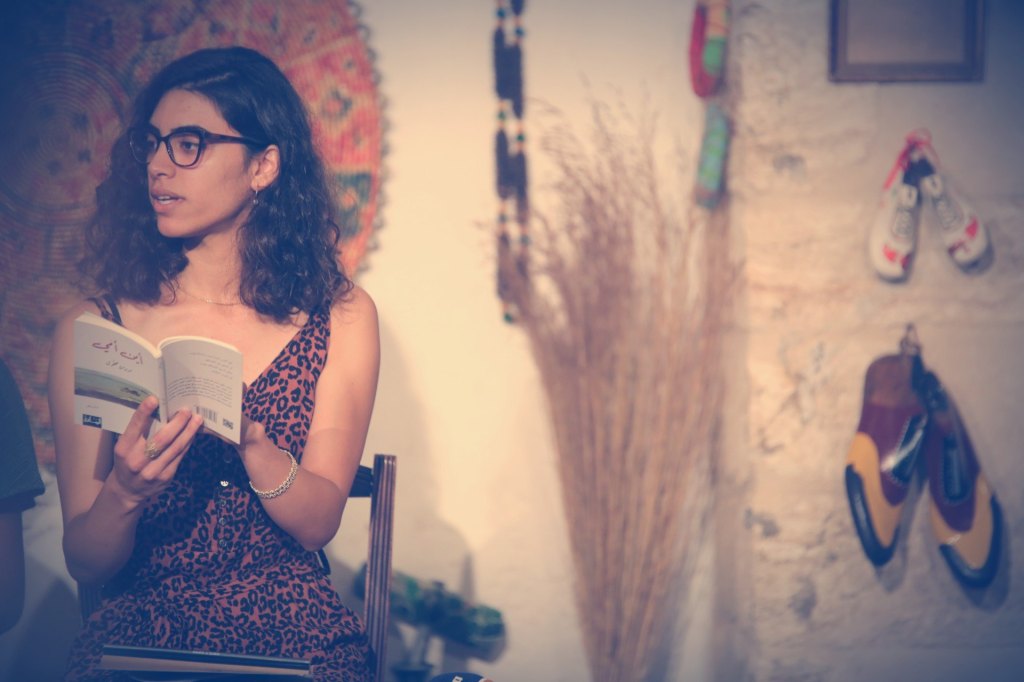
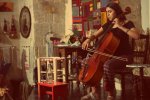
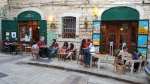
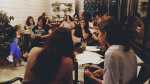
This Thursday (19th of August, 2021), we met on the roof in Masada st 38 in Haifa. We talked, got to know each other and did writing exercises that I’ve prepared earlier. We did 4 writing exercises: 1- stream of consciousness (writing for 7 minutes without stopping). 2- describing a space through smells, sounds and visuals. 3- intense physical [re]experience. 4- write a love poem to an object in your life.

The warmth and coziness of the gathering prompted me to write profusely and without stopping. It was really amazing and everyone felt comfortable and in their zone. We happened to be 8 women in the workshop, because other guys couldn’t make it. And this helped with the warmth of the ambience.

I’m attaching the reading excerpts we used to get our minds to warm up for writing:

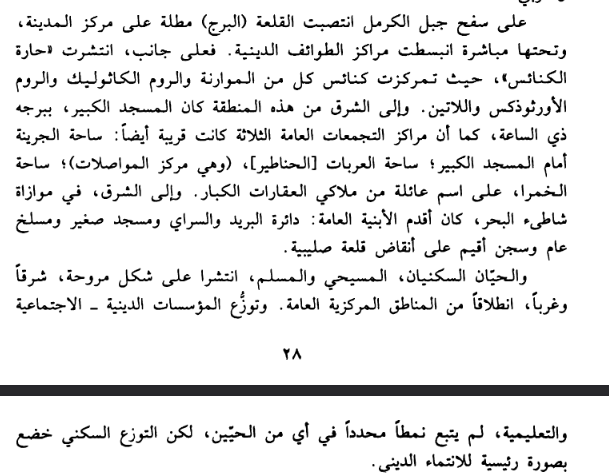
مصدر: حيفا العربية 1918-1937 – مي ابراهيم صيقيلي

on top of the Carmel mount a fortress is built, which overlooks the city center. Beneath the hill, stretch the religious centers. On the side, lies the Churches neighborhood (haret al kanayes), where we find the Maronite, Catholic and Orthodox church. On the east of this point, we find the big mosque with its clock tower. In addition, near by lie the three public centers: Al Jureneh square in front of the Big Mosque; the Carriages square (Al Hanateer square) and Al Khamra squre, named after a wealthy local family. On the east, parallel to the beach, the oldest public buildings stand: the mail office, the Saray, a small mosque, a slaughterhouse, and a prison built on an old crusade fortress.

Writing Workshop during lockdown

Ten days ago, on the 28th of Sep, we met via the Zoom program to write and revise our writing pieces together. There were 9 of us and 7 persons shared a piece that they wrote. The writings that we discussed is various including poetry, a novel introduction and a short story, and it included writing in Arabic and in English This fact made it a bit harder to give a professional feedback, because my speciality is English poetry. In other words, I’m more comfortable to give a more practical and useful advices about English poetry and less about prose or a novel. However, the space that I provided for myself and others enabled these ambitious authors to hear what people think or perceive when they read each piece.

At the end of the 2 hour long workshop, I received their contact info so I can send the writing prompts and the list of books and authors that was formed by the various suggestions in the introduction of the workshop.

Here is the reading list and the writing prompts:

Writing Prompts:

how do you familiarize yourself with something/somewhere/someone?

– try to dramatize the sunset or the sunrise! 

– Explore the liminal space of identity: what are your different identities/boundaries of identities?

– we talked about the airport being this “non-place”, can you think of other places being “non-place”? or places that heighten our sensitivity to a specific part of ourselves?

– how can you look at traffic in a poetic manner? 

– Play on the word “zigzag” in different contexts. 

– what’s the difference between “passive waiting” and “active waiting”?


The reading suggestions:
G. K Chesterton:  
Man who was Thursday
Napoleon of Notting hill
The Ball and the Cross
The Man in the High Castle Philip K. Dick
 Fatherland Robert Harris
 The Great War: American Front: Harry Turtle dove
Musee des Beaux Arts by W H Auden

The Parisian by Isabella Hammad

One Hundred Years of Solitude L’Arabe du Futur (graphic novel)home fire – kamila shamsie


WE READ PABLO NERUDA’s POETRY TOGETHER [despite the corona lockdown]

Since all of us are locked inside a defined physical space, the need to contemplate the ordinary becomes a necessity. 

One would expect that a quarantine would provide a space to get some rest, and liberate ourselves from the burden of productivity. Yet, looking at the social media outlets proves such conjecture wrong. We are constantly reminded to make “the most” of our times. At some point, this is so stressful. Bearing that mind, we tried to offer something different: a space to relax together, meditate and read poetry. In addition, the purpose of this workshop is as its name, Poetry is Closer than the Sea, suggests is to bring poetry closer to us in our daily lives; our daily confined lives.

I chose this poem specifically to fit this theme of finding beauty in the simple and the mundane. “Ode to a Large Tuna in the Market”, written by Pablo Neruda, is a simple, medium-sized poem. It talks about, yes about a large tuna that the speaker finds in the market while he’s getting his groceries. Halted by being and existence, he looks at this dead animal, and tries to revive it by writing an ode to celebrate its royal, heroic life, after all the tuna fish “survived the depth of the unknown, dark sea”.

First we read the poem in its original language, Spanish, and then we read it in English. Every time again and again, I am amazed by the people’s ability to draw interpretations and analyses out of poems. Their own being engages with the written word to create a story and a vision. One person mentioned the crisis of the fish, other talked about capitalism and communism, and last one talked about death and universal humanity.

But honestly, more than anything my intention was to grab people’s attention and to get them to pay attention more; to try to see beauty in everyday life. Something that validates the world, nourishes our longing for the sublime and creates something that didn’t exist before.

Here are some of the insights and reviews of the persons who attended the workshop:

“Discussing poetry in a warm and open environment, with people I know and people I don’t, was wonderful.During the quarantine, I have enjoyed reading, writing, watching films, etc. but yesterday’s event reminded me that culture is a fundamentally collective action. It is most valuable and enjoyable when it is shared.”

– Jonathan Shamir

What does this project intend to do || the theory behind the project

It attempts to explore, investigate and imagine the relationship between space and poetry. Questions are asked and some are answered, such as:

What space does a poem create? How does reading a poem affect the way we see/feel a certain space? Can a collective experience of a space be achieved through meditating on the same poetic verse? How does the physical and material place around me affect the way I read a poem? for example, if I read Wordsworth’s Tintern Abbey in a locked, dark room or if I read it in an open, green field, what difference does that have on the poem or on myself, the reader?

Obviously, all of these are valid, interesting questions. They open us to a wide field of possibilities to explore, learn and imagine.

In this blog, I document my project Poetry is Closer than the Sea, and its attempt to answer all these questions. I lean on the thoughts of many thinkers and philosophers, such as Lefebvre, Heidegger, Marx, Deleuze and Guattari.

Theory 

In his well-known book The Theory of Space, Henri Lefebvre writes: “space and time are not preconditions for experience, but they are rather experienced”. Such statement shakes the Kantian assumption that Time and Space are a priore; it makes space relative, and endows it with new meanings, beyond those transformed through our five senses.

Deleuze and Guattari offer their contribution to the spatial discussion by connecting space to the Marxist theory. They claim that space is a material abstraction. The capitalist system harnesses and takes over space in an attempt to reign it, tame it, and impose a meaning on it. One example for how authority controls society by annexing space is the one after the recent Arab revolution in 2011, the Egyptian government took over Tahrir Square and built a parking lot on it so to prevent any future protests, but also to disrupt the way people feel about the square as a source of democracy and freedom (this is interesting because the space of Tahrir Square was built through the colonial period in Egypt, and yet it served as the agora of liberation and democracy, that soon was controlled).

Heidegger also offers his contribution to the spatial element of the human experience (the phenomenon, which is distinct from being). In his elaborate mapping of the phenomenon, Heidegger establishes different realms and parts to access the phenomenon, such readiness-at-hand, present-at-hand and equipment. I would have liked to explain his theory more expansively, but I prefer that the reader refers to the original sources, and attempts to understand what does he mean. However, such deep understanding is not necessary to comprehend part of his theory that I’m incorporating in this project. Here is an excerpt to capture what he’s proposing as he talks about the carpenter:

“Phenomenologically speaking, then, there are no subjects and no objects; there is only the experience of the ongoing task. For example, when the carpenter is using the hammer and the nail engaged in work; he is not perceiving/thinking about the hammer in the same way he would if he stepped away and just looked at these equipment. He argues that in this experience, even the carpenter is not aware of himself as a subject.

What I try to do with this project is built on the premise that we’re engaging in the world, we’re looking at the hammer (in our case it would be the images, the poem…) and trying to perceive the phenomenon. In this process, the element of space, which is usually overlooked or perceived as a priore, is experienced. In other words, we’re all the time “in space”; we’re perceiving space as “familiar place” all the time, but at the time of the poem, my intention is to look at space in a more examining way- to look at it as a space, to deconstruct it and investigate it. It’s like when the carpenter stops using the hammer and looks at it.

However, the poem is a different entity- it’s printed on the page (physical) and a mental form as it creates a conceptual terrain of its own. Here I try to investigate the space of the poem in people’s hearts through meditation on physical space through questions like if you can describe the poem in a shape, what would it be? what color would it be? what texture?

My aim is to make us conscious about the space using the poem as an equipment. It’s actually reciprocal. We’re aware of the space/place through the poem and aware of the poem by the workshop [the space it creates].

Spatial Capital

16Julby Freddie Stuart posted on The Junction.

As the rate of return on capital increases at a faster rate than income, inequality increases.

This leads to centralisation of wealth and comparative diminution in the financial power of the consumer.

We are seeing this take place today, as small businesses are ripped off the high-street by multi-national corporations.

As these corporations expand, they are seeking places to expand their capital beyond the immediate vicinity of their traditional consumer base.

It is noticeable that as this happens we are seeing an increase in the use of spatial and temporal capital.

Spatial capital being the exploitation of new geographical locations, previously untapped by the invisible hand. (most notably with Chinese and Western enterprise into Africa).

We are also seeing this with temporal capital. Capital that guarantees a return by utilising future consumerism. I.e, debt. As a student I am weighed down by consistent reminders of my obligation to future remittance.

At what point does capital run out of space to expand?

المكان والشعر ||place and poetry

ولم يبق لهذا الخيال من أثر اليوم سوى في الشعر. فالشعر هو اللا مكان وليس المكان البديل. هو الفجوة التي يشقها الخيال داخل الواقع، فجوة مليئة بالتضاريس، ولا نهائية الكثافة. 

WE READ TAHA MOHAMMED ALI’s POETRY TOGETHER [despite the corona lockdown]

We are all locked up in our homes because of the Corona virus crisis. Despite these difficult times, we choose to keep our “poetic” activism going by having an online poetry workshop last week (10th of April, 2020).

The goal of this workshop, like our previous ones, is to create a safe, free space to discuss and read poetry. With no previous knowledge or expertise, we invited the audience to join us for a two-hour workshop. It was given by Yara Abu Dahood as she presented Taha Mohammed Ali’s poem “Al Bashiq” (sparrowhawk in Arabic).

After a brief introduction, we tried to conjecture what’s the poem about reading its title “Al Bashiq”. And yet Taha succeeded in surprising us by opening the first lines of the poem by addressing sadness:

الباشق
-1-
اذا استطعت يا حزن
يوما
ان اتحرر منك…
فاني ساشعر
حتما,
بغبطة المنتحر…
وهو يتحرر من تبعاتة .!!

The SparrowHawk

-1-

If I could one day

to liberate myself from you

sadness

I will definitely feel

the ecstasy of a suicider

releasing his burdens.

The 11-stanza-long poem is an apostrophe to sadness that reveals the poet’s deep doubts, fears, and longings. The language is fairly simple and he uses lots of enjambment, to make the poem a long rumination pinned down on a paper; a let go of a heavy sigh of bittersweet relief.

It was interesting to see the reactions of the audience, each one offering an interpretation of their own about the source of sadness and its function in the poem or in the poet’s life. Especially since the latter suffered from a violent exile and catastrophe when he was expelled from his hometown of Saffuriya.

The space this workshop created is interesting for many reasons. First, it was done online via ZOOM application and thus lacked the immediate, humane contact. Second, the theme of the poem is unusual-sadness, which prompted people to bring more serious and personal topics. Third, we still felt the tension between different interpretations as some participants wanted to prove that their own reading was the “right” reading. Fourth, many of the people who took part of this workshop never read poetry before and so many were more interested by the content and context of the poem rather than its form. And last, I felt an actual sphere or space manifesting itself to house the different readings.

In my study of poetry and space (email me for the whole thesis I wrote about the relationship between these two fields), I focused on two aspects: how does the poem we read affect the physical space we are in, and how does the physical, social space we are in affect the space of the poem (the space that the poem creates). This workshop things were different, as we weren’t sitting in the same physical space, but each one of us was sitting in the comfort of their homes. And yet we created an online, virtual space to be shared by all of us.

Another space that this workshop creates is free-consumption space.
We are told that we should make the most of our time during this quarantine; we should make our time “productive” by investing it in cooking, watching a movie, working out, planting… all sorts of consumption. Reading a poem and contemplating its meaning demands nothing of that. It is a free space not to consume. Although some people might counter-argue and say that we also consume poetry, and it might be true, but this is not the purpose of the Poetry is Closer than the Sea platform.

Moreover, since we are all locked in our homes with a limited access to other places and spaces, contemplating becomes a necessity. And this is exactly what we aimed to have: a contemplating, pondering and imagining of the world, the poem, the poet and the feeling of sadness.

HERE ARE SOME REVIEWS OF THE PARTICIPANTS:

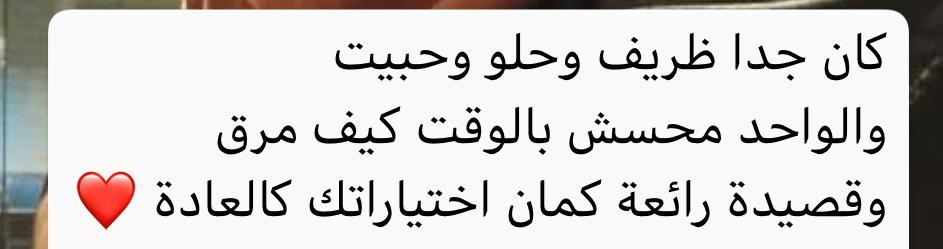
It was really beautiful and cute- one didn’t feel the time passing!
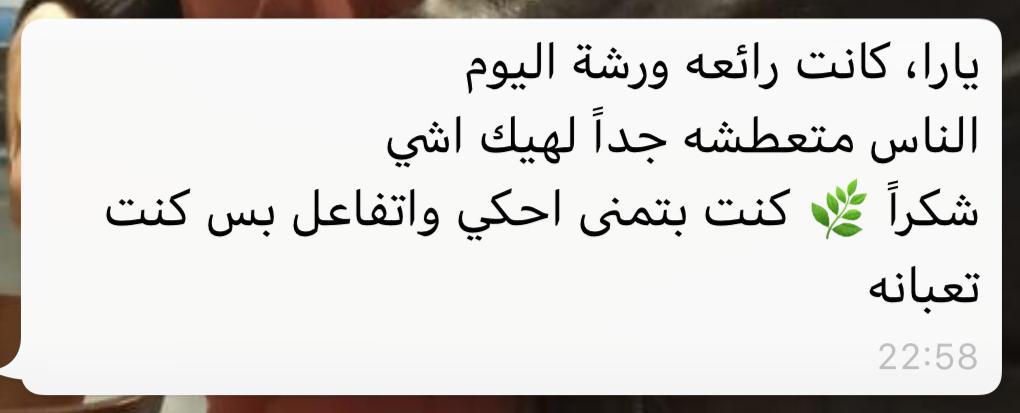
Yara, the workshop was great today! People are thirsty for poetry!
Thank you!
Thank you for the amazing idea, and useful initiative.
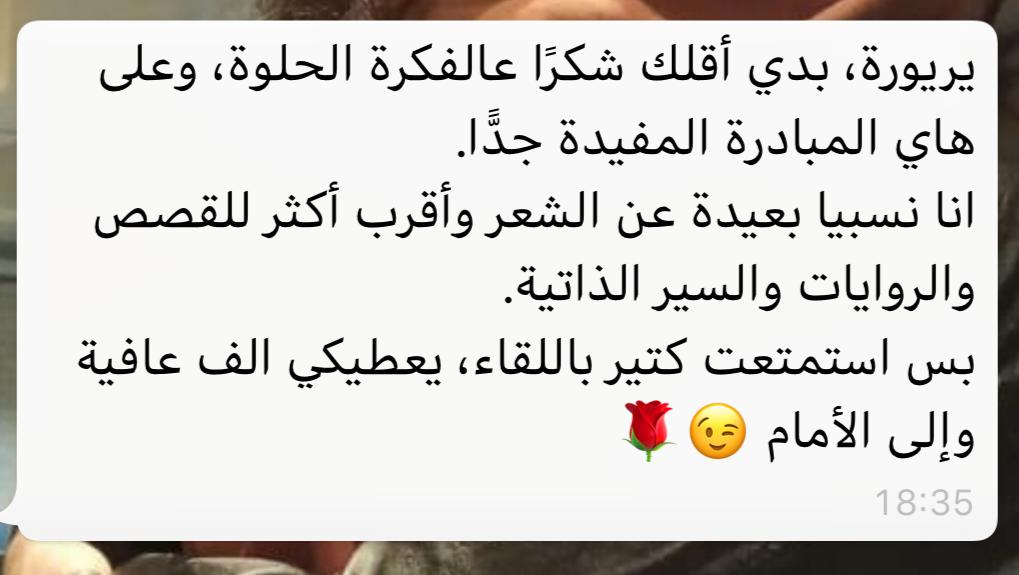
I am usually far from poetry and prefer novels and autobiography, but today was really beautiful! Keep it up!

Stay tuned for our next workshop to discuss a poem online next week!

الأمسية – الشّعر أقربُ من البحر في عرابة البطوف

يارا أبو داهود

في التاسع من أيلول / 2019، أقمنا عائشة ياسين وأنا أمسيتَنا الشعريّة الثانية، في قرية عرّابة البطوف، في مقهى سَليمة. قمنا هذه المرّة بقراءة قصيدة في اللغة العربيّة وأخرى باللغة الإنجليزيّة، وأضفنا العنصر الموسيقيّ بشكلٍ بارز، فكانَ الدّمج متناغمًا مُثريًا للعقلِ والنَّفْس. اخترتُ مقطعًا مختلفًا من قصيدة “لاعب النّرد” للشاعر محمود دروش، بدأتُ بمناقشته مع الحاضرين بعد أن قدّمتُ موجزًا عن الشّعر الحديث بشكل عامّ وعن الشّاعر درويش بشكلٍ خاصّ. أمّا عائشة فقد اختارت قصيدة للشاعر ريتشارد ولبر بعنوان “An Event”، وقدّمَت موجزًا عن الشاعر وعن الخلفيّة الزمنيّة التي كُتبت فيها القصيدة وقامت بعد ذلك بمناقشتها مع الحضور.

كان النّقاشُ فعّالًا ومثريًا ومُجَدِّدًا، استطاعَ الحاضرونَ خلاله أن يعصفوا ذهنَهم بأفكارٍ وليدةِ اللحظة وأن يعبّروا بحريّةٍ عنها. اختلفت أعمارُ الحاضرينَ وتنوّعَت اهتماماتُهم ومجالاتُ دراساتهم وأعمالهم، فمنهم مَن درس العلوم السياسيّة ومنهم من درس علم الحاسوب أو فنون الرّقص أو الآداب أو علم الاجتماع، وقد تمكّنّا من إثارة الإبداع الفكريّ لدى جميعهم. قصَدنا في نقاشنا أن نلفتَ النظر إلى الأساليب البلاغيّة التي قد لا ينتبه إليها القارئ أو لا يعي الغرض منها، كأسلوبِ تّكرار الألفاظ، كتكرار لفظة الحظّ في قصيدة محمود درويش للتشديد على الحظّ كمفهوم مستقلّ وقويّ في مسيرة تكوُّن الفرد، وكأسلوب الاستفهام في بداية المقطع الثاني من قصيدة ريتشارد ولبر: “”What is an individual thing?.

أمّا عن سَيْر الأمسية، فقد ابتدأ بالموسيقى وانتهى بقراءات شعريّة حرّة؛ افتتحَ مروان بلّان (كفركنّا) الأمسيةَ بالعزف على البيانو، ثمّ ناقشنا المقطع المختار من قصيدة محمود درويش “لاعب النّرد”، وقبل البدء بمناقشة القصيدة الثانية، عزف مروان مرّة أخرى كما عزفَت مروة ياسين (عرّابة) معزوفةً ألّفتها بنفسِها، ثمّ باشرت عائشة بإلقاء قصيدة “An Event” وقيادة نقاش غنيّ، عدنا بعدَه إلى فِقرة موسيقيّة أخيرة، شاركتنا خلالها رندة سليمان (سخنين) بغناء أغنية تتحدّث عن العنف ضدّ النّساء، قامت بكتابتها وتلحينها بنفسها.

ردود الفعل التي وصلتنا بعد الأمسية كانت إيجابيّة، فجميع الحاضرون عبّروا عن سعادتهم بالمشاركة، وعن ارتياحهم في النقاش، ووصفَ بعضُهم الأمسيةَ بأنّها تجربة فكريّة وروحيّة مُثرية – وهذا ما كنا نسعى، عائشة وأنا، إلى تحقيقه.

Blog at WordPress.com.

Up ↑

Design a site like this with WordPress.com
Get started