A Second Poetry Night

by Aicha Yassin

This time we experimented with the workshops sessions:

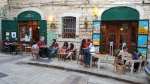
First we discussed one poem in Arabic, then we had a musical intermission that was followed by the discussion of the English poem. The Arabic poem that Yara presented is an excerpt from Mahmoud Darwish famous soliloquy “The Dice Player”. The discussion was really rich and offered me so many insights and connections to Darwish’s exquisite use of figurative imagery and metaphors. For example, the image of the feather falling on the sand. He used this image to describe the possible failure of a poem, that falls but doesn’t shine, but it merely swings like a feather and hits the sand, leaving no sound, echo or print. Another example of the beautiful descriptive language that the poem employs is when he talks about the inspiration of the poem, he says: I have no role in my life, except that when life taught me its hymns, I lit its lantern and tried to adjust/change its light. Isn’t this such a beautiful imagery? Moreover, my dad  talked about the time that Mahmoud Darwish came to Arrabe and recited a poem in the square of the communist party center. He was 10 years old at that time, but he still remembers very vividly the charismatic, intellectual, young Darwish exciting the crowd. My dad telling this story added to the richness of the experience of reading Darwish. He connected the space of Arrabe with Darwish and his poetry that we were reading at the moment. This story connected us to the place and grounded us as well as our identity as sons and daughters of this land.
Having the music intermission was amazing, Marwan played a piece, then Marwa played a piece that she composed titled “lost and found”. It was a good thing to have a break from too much talking and focus on words, but rather to listen and to enjoy the mellifluous melodies of the piano keys. 

Later, the English poem that I chose is “An Event” by Richard Wilbur. I chose this specific poem for many reasons: first, I think it’s fitting for the theme of the night – meditation. Second, I think it’s a simple poem that offers the readers a chance to read a simple, easy poem to reach a deep state of contemplation and reflection. The poem mainly talks about the speaker’s attempt to describe a flock of birds in the sky. It’s meta-reflective as it tries to capture the movement of the birds, and having failed to do that, the speaker announces at the end that this whole attempt that turned into a poem shows us “how cross-purposes the world is dreamt”. And I think this is such a gorgeous image invoking serenity and peace of heart. The birds have their formations and their purposes, and the poet has his purpose and way of perceiving things, and this poem is an intersection between these two paths. And this what makes poetry great. 

We tried not to tell the people what the poem means, but to give them the basic tools of poetry reading, so they can shape their own idea and path of how a poem should be read. 

We spent three hours lost in the world of poetry. At the end, four people of the audience shared their writings and another person sang a song that she wrote and composed. It was phenomenal. 

I look back at this evening and I am filled with happiness and pride: the evening was successful. The audience was riveted, and had the chance to get lost in a less-stressful world of our reality. A world of rhymes, metaphors, interpretations, space to play and think. It was perfect. What added to the richness of this night are many things: first, the audience was diverse, including old and young, Christian Muslim and secular, persons from different villages and cities in the region. In addition, this is one of the first attempts to create cultural and artistic spaces and platforms outside of the known, famous centres such as the city of Haifa or Jaffa. This is one of the first attempts to bridge the gaps between the “not-cultured” village-dwellers and the intellectual scenes taking place in the cities. I can say for myself that I feel that this attempt reaped fruit: many people showed up and many people have asked for more events and nights like these. In addition, the librarian in our town has started an initiative to start a club for poets and writers in Arrabe. I think our evening has inspired such movement. 

Last, I am grateful for everyone who took part of this and I’m looking forward to future events. 

أُمسيّة شعريّة في النّاصرة

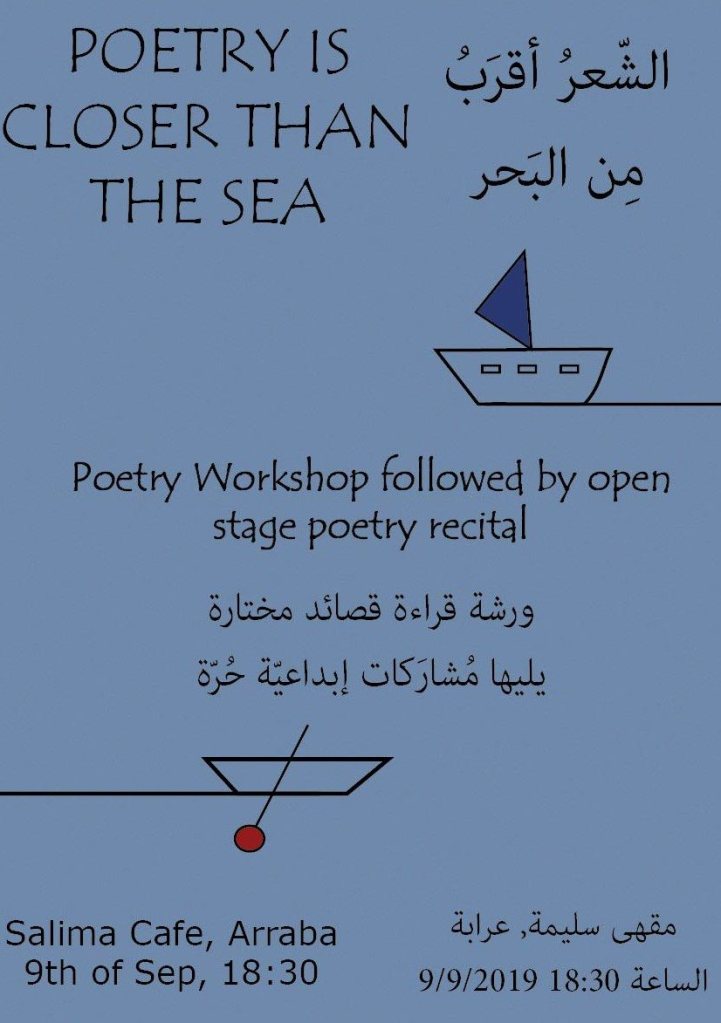
“الشّعرُ أقربُ من البحر” هو مشروع يقوم على توظيف طاقاتنا اللغويّة في المجال الشعريّ، وقد بدأنا ببنائه بعد أن عرضت عائشة عليّ أن نساهم في تقريب الناس من الشّعر، فعملنا على تطوير الفكرة حتّى أصبحت أمسية مستقلّة، تتناول قصائد عربيّة وقصائد إنچليزيّة تحملُ ثيمةَ التأمّل، وترسم سبيلًا نحو تذوّق الشّعر، وتتيح المجال لعصف الذّهن وللمشاركات الإبداعيّة.
أرى بأنّ هٰذه المبادرة، من جهة، قد كانت مساحة للنّقاش وتبادل الآراء، وهو ما نحن بحاجة إليه في عصر التكنولوجيا الذي يمنعنا عن التواصل الفعليّ. ومن جهة أخرى، هي مبادرة تقرّب الحضور من عالم الشّعر، من خلال توضيح بعض طرق قراءته وفهمه.

في أمسيتنا الأولى، والتي أُقيمت في تاريخ ١٢ حزيران ٢٠١٩ في سوق الناصرة / زاوية غادة، قمنا بمناقشة قصيدتين من أدب اللغة العربيّة الحديث، الأولى للشاعر مروان مخول بعنوان “الآن”، والثانية مقطع قصير من قصيدة “لاعب النّرد” للشاعر محمود درويش. كما ناقشنا قصيدتين من عالم اللغة الإنچليزيّة، الأولى بعنوان The Travelling Union للشاعرة نعومي شهاب ناي، والثانية بعنوان The Wasteland للشاعر ت. س. إليوت.
تفاعلَ جميع الحاضرين دون استثناء مع جميع القصائد الأربع، وقد كانت حلقة النقاش مُثرية ومتناغمة، توسّعَ إلى تجارب وتأمّلات شخصيّة، وهو ما أسعدَنا وأثبتَ لنا أنّ الشّعر هو طريق إبداعيّ نحو نقاشٍ إبداعيٍّ، وهو حالة روحيّة كاملة. إضافةً إلى ذٰلك، أتحنا المجال للمشارَكات الإبداعيّة الحرّة، فشاركَنا الحاضرون كتاباتهم الشعرية والنثريّة وموسيقاهم الهادئة.
خلال النقاشات، قام المشاركون بتحليل التّعابير الشعريّة من وجهة نظرهم الخاصّة. وتطرّقنا إلى الأساليب البلاغيّة، كأساليب التّشبيه والاستعارة والجريان المشتركة بين جميع القصائد الأربعة، وإلى المبنى والمفردات – وهي المكوّنات البنائيّة التي يمكن من خلالها فَهم الشّعر بشكلٍ أعمق.
في نهاية النقاشات، استطاع المشتركون ملاحظة الرابط التأمّليّ بين القصائد، فعلى سبيل المثال، مقابل صوت محمود درويش الذي يقول: “والوحيُ حظُّ الوحيدين” يأتي صوت مروان مخول قائلًا: “لو كنت أعرفُ سلفًا أنّ الإبداع / ليس اجتماعيًّا إلى هٰذا الحدّ، لكنتُ / وأدتُ قلمي في المحبرة”.

Poetry in Nazareth Market

Time: 12th of July, 2019. A Friday.

Place: Ghada’s corner in the old market of Nazareth.

Description: walking up the flagstone path from the Basilica of the Annunciation inside the old market at the hour of the evening is breathtaking. Just on my right, a swoop of swallows rise and circle the grey dome overlooking Mount Precipice. A group of nuns descend the stairs towards the city center and I can hear them murmuring in Italian. I enter the market narrow alley, covered with zinc plates. The air is thick here and all of the shops are closed. Usually they close at 3pm. I climb my way up the road slowly, trying to listen to the walls recount the stories of the place- isn’t this the memory of a space? the stories that are told by the cobblestones, the graffiti, the signs and the stone gutters?

I arrived early to Ghada’s corner and I sat to catch my breath and spoke with Ghada about the market news, tourism and the current socio-political situation. The situation is nothing but alarming. I don’t drink coffee as I know it will make me hyper before a big event like today’s. So I refrain when Ghada offers me an Arabic, rich cup of coffee, and I drink water.

It’s a poetry reading workshop along with an open stage for poetry recital. My friend, Yara Abu Dahod, and I have organized this in an attempt to bring poetry closer to the real life, and thus the event’s name “Poetry is Closer than the Sea”. I prepared two poems in English, Yara prepared two in Arabic, and then we would have an open stage for free performance.

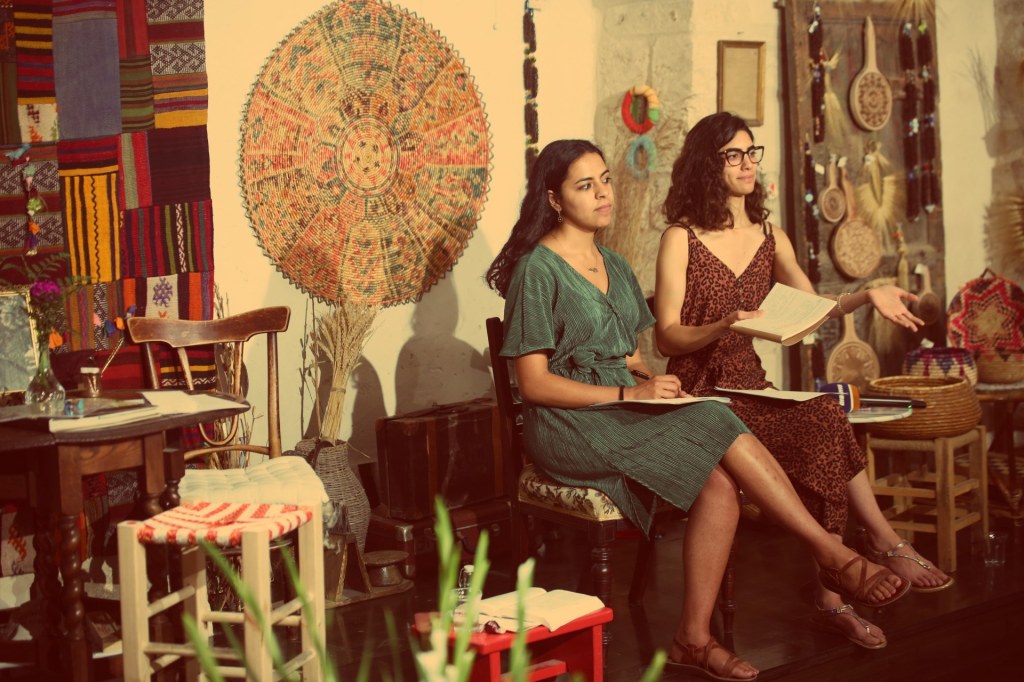
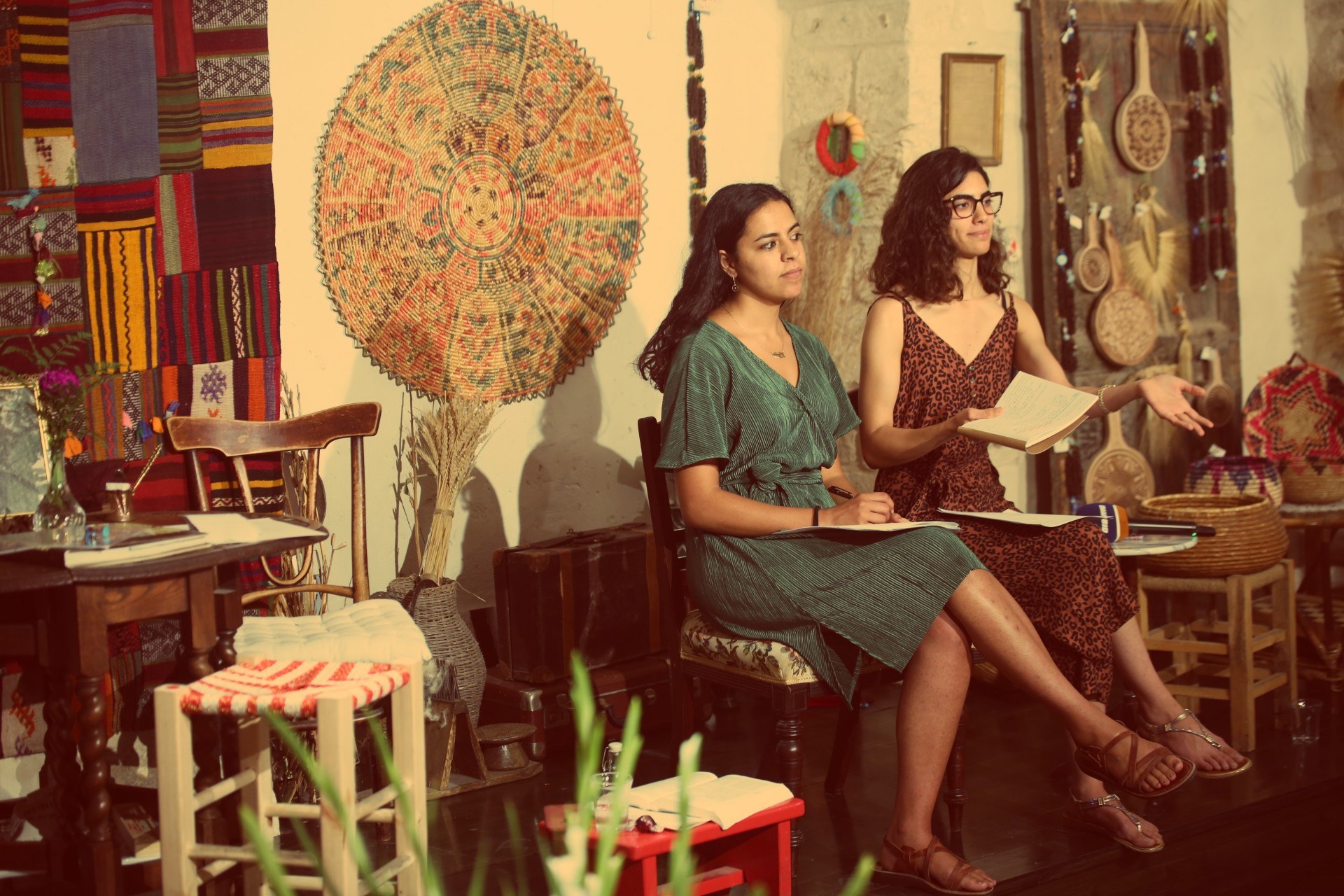
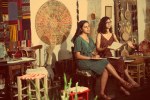
The audience arrive on time: familiar faces of friends and loved ones. We all sit on comfortable, traditional Arabic chairs that Ghada had collected over the years. Her shop is like a museum: an old arch connects two old stone rooms built probably 200 years ago. The walls are covered with antiques, trinkets, hand-made cloths and souvenirs. A chisel from Armenia, a long necklace of cloves made to protect people of envy, according to the Druze tradition, embroidered bags and much more. I recommend everyone who has the chance to visit Ghada’s corner and to enjoy a good cup of Arabic coffee.

We start on time which is good. We begin with a welcoming word and a brief overview of what we’re gonna do. We don’t want it to be a class, nor are we lecturers, we just want to enjoy poetry together. So we sit in circle and begin our first poem: “Now” by Marwan Makhoul, a local poet from the village of Mia’lia (I translated the poem here). The theme of the event is meditative poetry: to read poems with a meditative intention. And our job is to provide the people who came with basic tools of poetic reading: metaphor, enjambment, simili, rhyme…

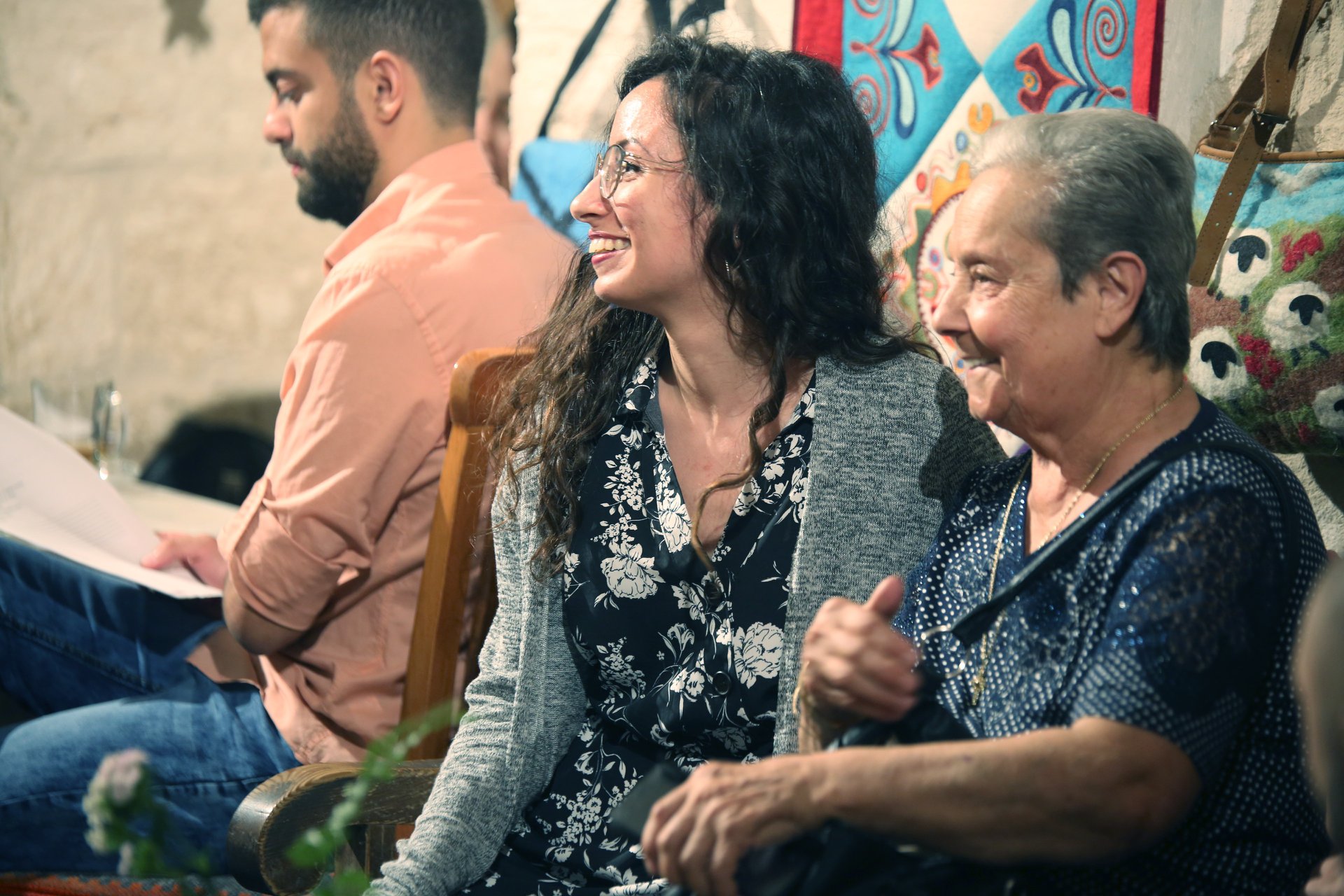
The participation of the audience is great as I got to listen to various interpretations of the same words from different people; some interpretations that haven’t occurred to me though I have read these poems more than once. If anything, it just showed me the power of poetry to have this flexibility and this accessibility to people’s hearts and minds.

Aicha Yassin and Yara Abu Dahood

The next poem we discussed was “The Traveling Onion” by Naomi Shihab Nye. It was funny at first to repeatedly say the word “onion” and talk about it as if it’s this great character. After all it was just an onion, but as we sat there with our meditative hearts and eyes, we got to ponder an onion in a way that we never have: where did an onion come from originally? can we live without onions? what can the onion symbolize? It was very exciting indeed. One interpretation of the whole poem blew our minds: the onion symbolizes Christ. As the poem connects the fact that onion disappear when they’re cooked and receive little credit, with the value of sacrifice for others.

The next poem we discuss is The Dice Player by Mahmoud Darwish. It’s a long, famous poem in which Darwish recounts his autobiography in an epic soliloquy form. We discuss the part that talks about inspiration and writing: the speaker says that he’s not the creator of these rhymes, but he’s rather a messenger between the inspiration and the people. He’s a prophet of words. Many people in the audience offered their ideas about this “artistic urge”, which can be a bliss as much as it can be a curse. Later on five people would come up to the stage to read their pieces, expressing themselves and sharing their ideas with others.

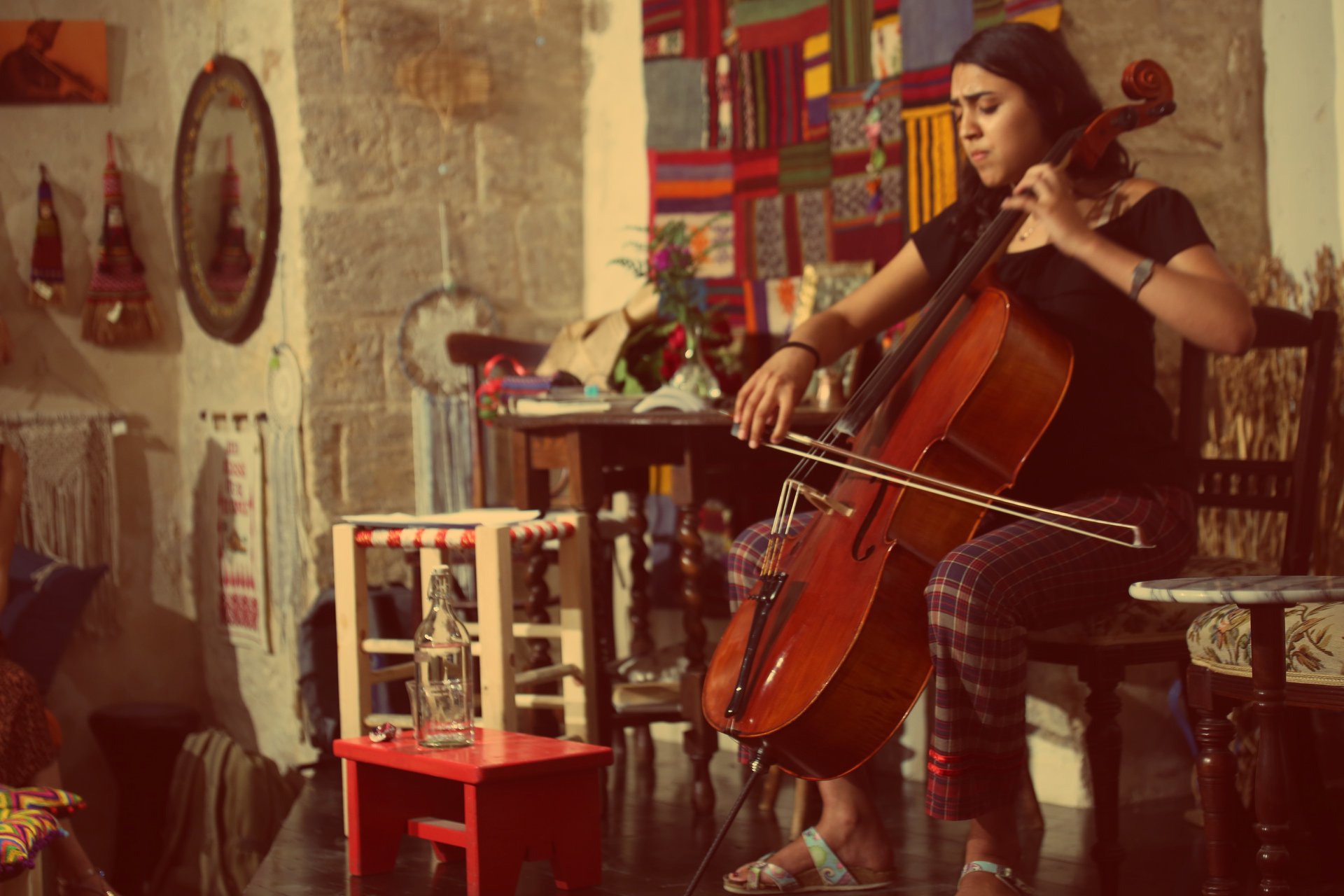
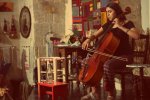
Safa Yassin playing the Cello

The last poem that I presented is an excerpt from The Wasteland by T. S. Eliot. Anyone who is familiar with Western literature or poetry knows that this piece is a landmark in the development of modernist poetry at the beginning of the 20th century. I chose this poem because I wanted to familiarize the audience with this famous poem, and also to hear their readings of this very difficult and dense poem. Honestly, we spent 4 lessons in university just to understand what was Eliot talking about. If anything, it’s a reflection of the confusion, mess and loss of that epoch, especially after the first World War.

Many people told me that such an event won’t make it because people don’t understand English, and they won’t understand the lines of the poems. This is not true. I left Ghada’s corner with tremendous energy for more and hunger for poetry, along with some conclusions and insights:

  • poetry is strong and poignant. It’s a great to bring people together.
  • language is never a barrier. The fact that I am passionate about English language is not a reason not to be involved in my Arab Palestinian community. It’s just another layer of richness.
  • This is the beginning for something bigger: Poetry being closer to people.

Blog at WordPress.com.

Up ↑

Design a site like this with WordPress.com
Get started